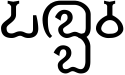
1 Introduction
Pallava refers to a dynasty of South India, flourishing around 6th-8th century AD, and to a beautiful writing system employed under their reign, which spawned almost all the scripts of SE Asia. A surprising lack of accessible information about this script has prompted the creation (and continuing development) of this page. In May 2013, I initiated the page on Wikipedia.
1.1 Historical & geographical context
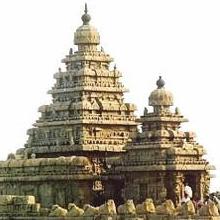
The Pallava dynasty was established in the region of modern-day northern Tamil Nadu and southern Andhra Pradesh, and centered at Kanchipuram. Official languages were Tamil, Telugu and Sanskrit. Vedic religion was practised, and Buddhism was also supported. The Pallavas were most reknowned for their stone architecture, but it was the attractive writing seen in rock inscriptions and on copper plates which made its way abroad and had far-reaching consequences.
But the Pallavas were in almost constant conflict with neighbouring regions, and in the context of paleography there is a somewhat parallel confusion of influences and attributions, which persists into the present. In an effort to define the relevant characteristics, it helps to ‘freeze’ and observe the period which saw a South Indian script exported eastward to Burma, Thailand, Malaysia, and Indonesia. (Orthographic influence was eventually felt as far away as Borneo and the Philippines.)
So although the emerging script has also been called proto-Telugu, proto-Kannada, Kadamba, a form of Grantha, or simply Southern Brahmi, it seems certain that during the reign of the Pallava kings, the script in question accompanied priests, monks, scholars and traders into SE Asia, and etched itself proudly into stone as the earliest relics of writing there. This South Indian east-coast region was surely a major conduit for the Vedic and Buddhist influences being firmly established in the kingdoms and cultures further east. There was even a king of the Pallava lineage (Kadavesa Harivarma) ruling Kambujadesa (modern day Cambodia and Vietnam) in the 8th century.
1.2 Orthographic characteristics & familial associations
The Pallavas developed (or fostered) a very beautiful and influential writing script based on ancient Brahmi, which was in turn the primary writing system of southeast Eurasia since around the 3rd century BC. The main characteristics of the newer script are aesthetically matched and fuller consonant glyphs, and extending the idea of attached vowel-signs to allow consecutive consonants or clusters to be joined in vertical ‘stacks’. In addition, long swirling tails and nice sense of space and layout are distinctive in both South Indian and Southeast Asian examples.
But already many features which identify the Pallava script were visible in the writing systems of earlier and nearby dynasties. In particular, the Chalukya Empire of Karnataka and Central India (to the west and northwest) and the more local Kadamba dynasty (Canarese) within that, centered at Banavasi; and the Vengi region to the north, at the time of the Andhra Ikshvakus. Regions to the south and southwest of Pallava territory appear to have taken the Brahmi design in a slightly different direction: the Chola, Pandya and Chera dynasties of what is now Tamil Nadu and Kerala.
The exemplary feature of Pallava (as we may call the representative script) has two related aspects. It is among the very first significant developments of Brahmi in India; and still being an inscribed form, it takes care in combining both rounded and rectangular strokes, and adding typographical effects such as notches (to signify the ‘head’ or attachment point) and space-filling tails. This made Pallava eminently suitable for civic and religious inscriptions, still having a monumental feel like the long-respected northern imperial Brahmi, yet more decorative.
1.3 Later developments
In India, the basic Kadamba-Pallava script evolved almost directly into early forms of both the Kannada and Telugu scripts. There is some similarity with early forms of Grantha and Tamil, but these already have many different consonant bases. In each case, the glyphs become more rounded and incorporate loops, things which the later advent of relatively rapid writing upon leaves and paper allowed.
Pallava traders and travelers introduced their writing to Southeast Asia, and it was by all accounts much admired, appreciated and emulated. Earliest exported texts are in Sanskrit and Pali, but soon local languages adopted forms of the script. It was the parent of:
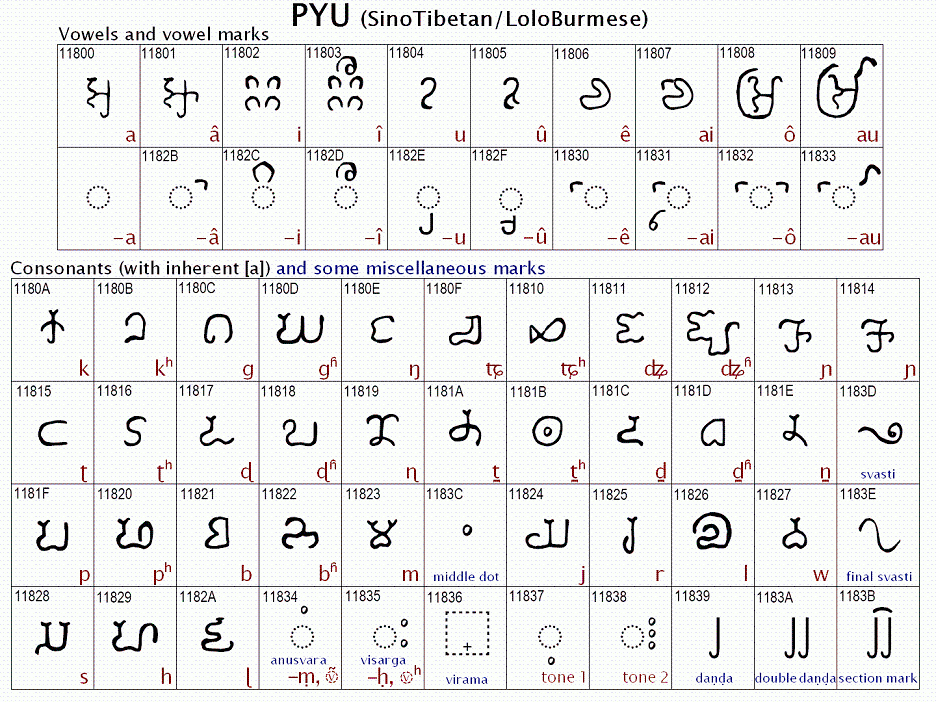
- Pyu (Burma)
- Mon – Burmese
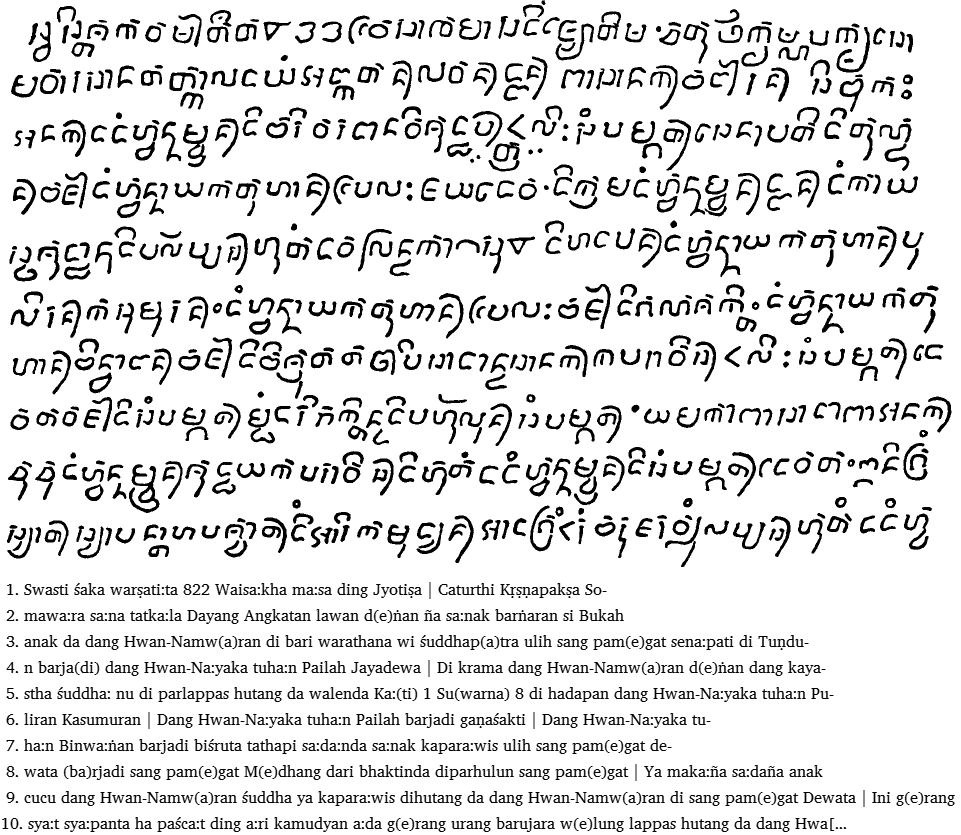
- Kawi – Javanese, Balinese, Sundanese, Buginese and others (Indonesia, Philippines, Borneo)
- Lanna, Tham (Thailand)
- Khom (Thailand)
- Khmer – Cambodian
- Thai and Lao
- Tai Lue and other Tai language scripts (Burma, South China, Thailand, Vietnam)
- Cham (Vietnam)
2 Charts
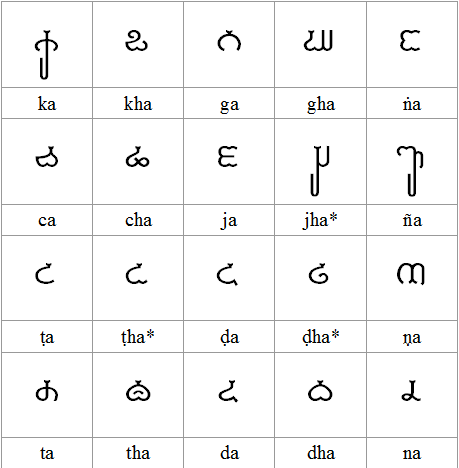
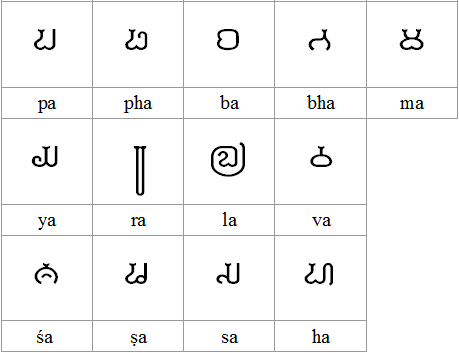
The forms shown here are based on examples from around the 7th century AD, but should enable recognition of both earlier forms and those which started to appear in SE Asia from this time. The glyphs shown here (from a font of my own design) are also under development, as I search for more generic or representative forms. Those labeled * are a little uncertain, having very little representation in the SE Asian region.
2.1 Consonants
Each consonant has an inherent /a/, which will be sounded if no vowel sign is attached. If two consonants follow one another without intervening vowel, the second is made into a subscript form, and attached below the first.
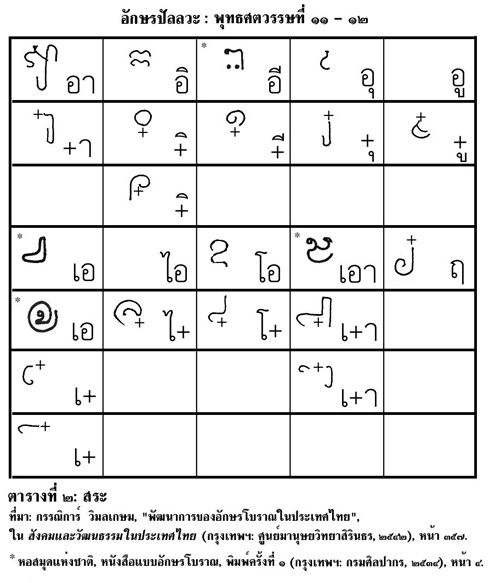
2.2 Initial vowels, and dependent vowels, liquids etc.
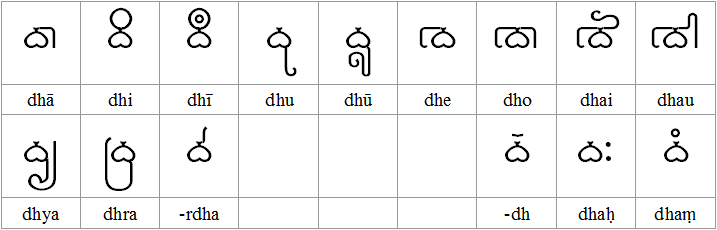
Most vowels have a special form when at the beginning of a word. Otherwise, vowel signs will attach in various ways around the body of the consonant (here using /dh/). There is also a mark for final (vowel-less) consonant, a glyph for final /h/, and a mark for vowel nasalization (usually of the consonant’s /a/ or /u/).
|
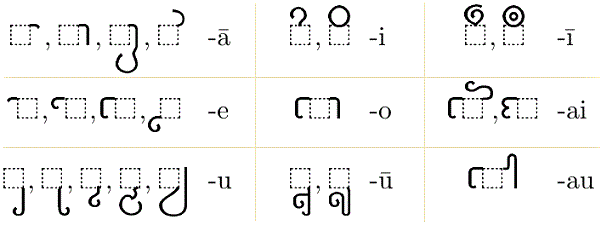
2.2.1 Vowel variants. There are some variations, all familiar to some extent from later descendants. Sometimes several forms of the same vowel are displayed in a single example of text. Mostly the variations seem to be practical (for example, avoiding collision with consonant parts) or purely aesthetic.
2.3 Special forms
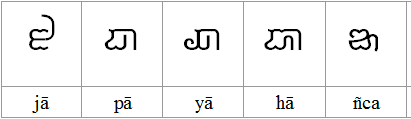
Vowels attach to the ‘head’ of the consonant if available, and sometimes this means a change of shape. Also, when clusters of consonants are assembled, some subscript forms are made different to their regular form; this usually makes the combination both more legible and more aesthetic. [more to come]
2.4 Subscripts and other ligatures
[much more to come]
3 Examples
Unlike many students of paleography, I have less interest in the content and exact historical context of inscriptions, than on the aesthetics and stylistic evolution. And given the many claims to ownership of the script, and the many claims to what constitutes the ideal of Pallava, I am satisfied to stand aside, to just admire and preserve good examples.
3.1 Indian forms
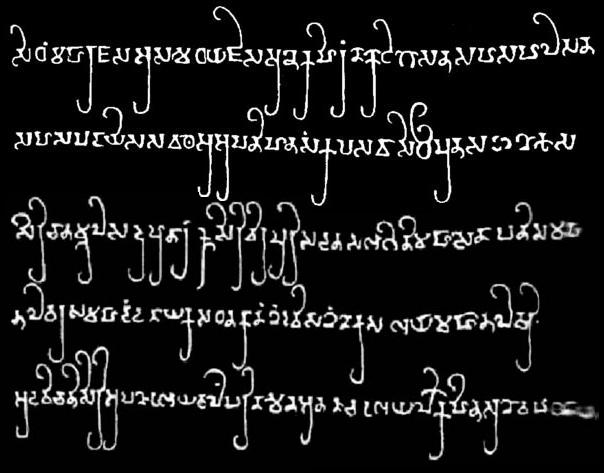
3.1.1 Vengi inscription, 3rd century AD. Shows elaborations upon the ancient Brahmi script, and consonant forms which appear in the later Pallava. Assembled from several partial images of the one inscription:
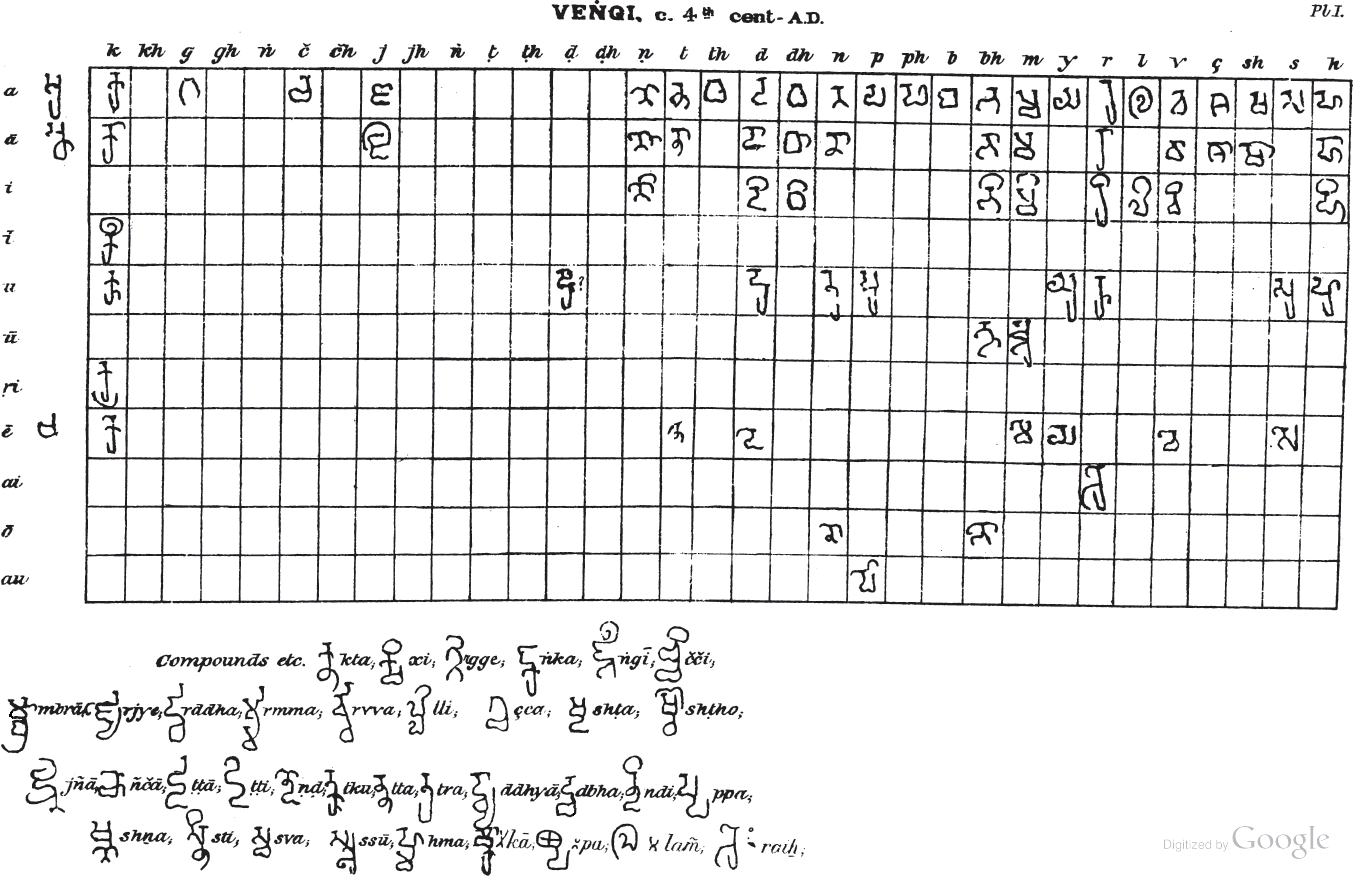
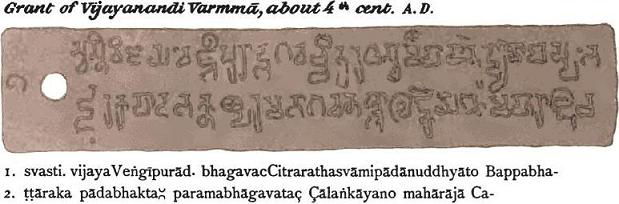
3.1.2 Vengi copper engraving, 4rd century AD (source Burnell, Elements of South-Indian Palaeography, 1878):
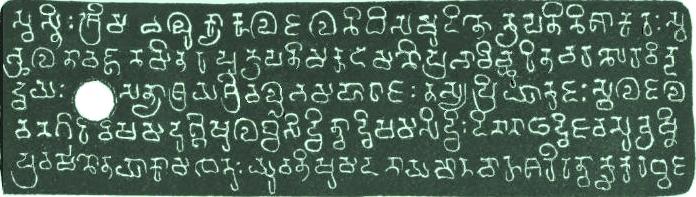
3.1.3 Chalukya copper engraving, 622 AD. Many features more confidently expressed in Pallava script are noticeable here (source Burnell):

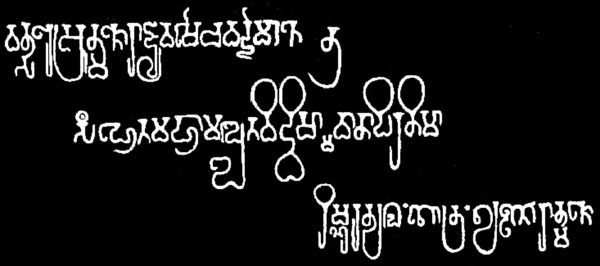
3.1.4 Classic Pallava forms of 640 AD, showing large /i/ vowel overhead, and consonantal stacking:

3.2 Exported forms
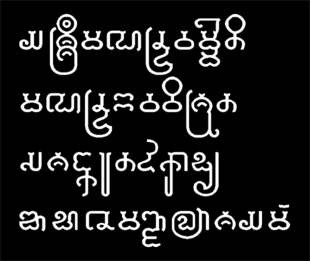
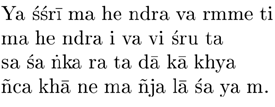
3.2.1 Sra Kaeo in central Thailand, 7th century AD (reproduced using my own font):
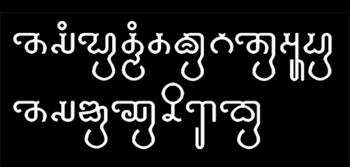
3.2.2 Nakhorn Pathom in central Thailand, 7th century AD (reproduced using my own font):

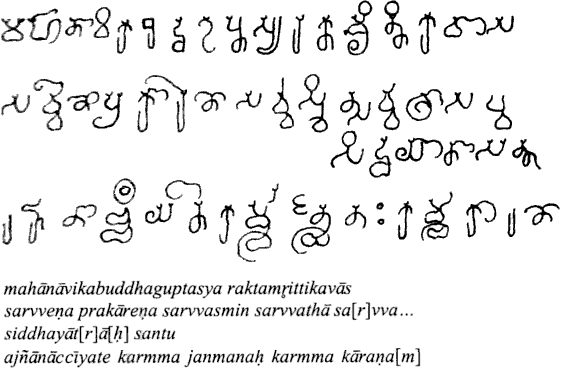
3.2.3 South Kedah in Malaysia, 5th-7th century AD (source Laidlay, Note on the Inscriptions from Singapur etc, 1848):
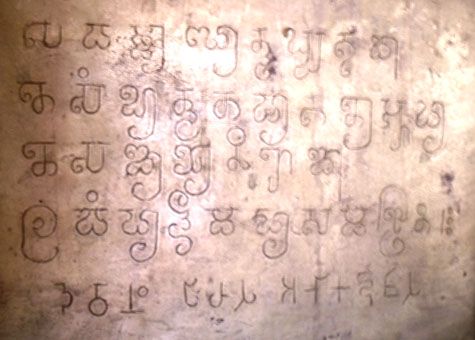
3.2.4 Fang in North Thailand, estimated late 7th century AD, showing a quote in Brahmi below the Pallava (my own photograph):
[more examples to come, hopefully]
4 Repository
4.1 Neigbouring scripts
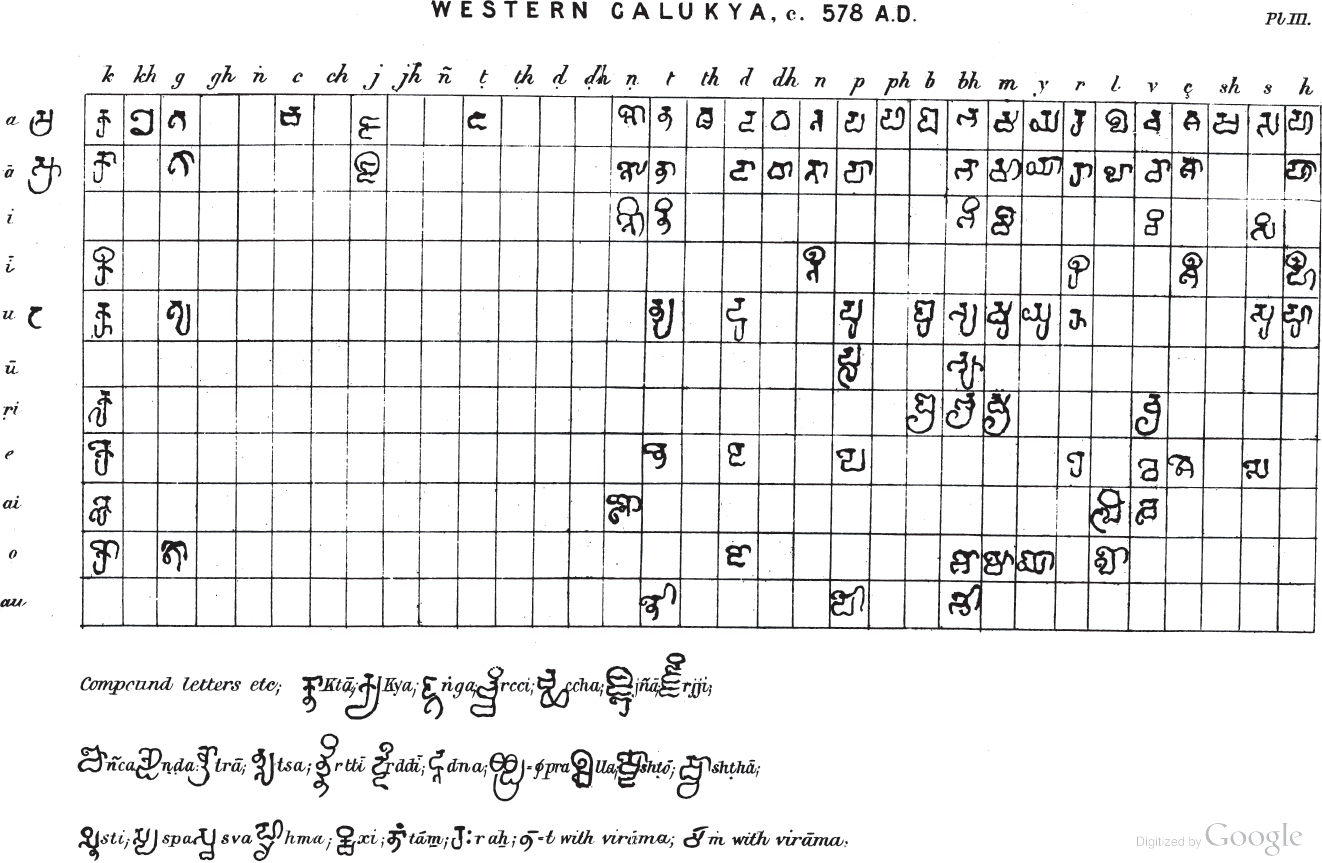
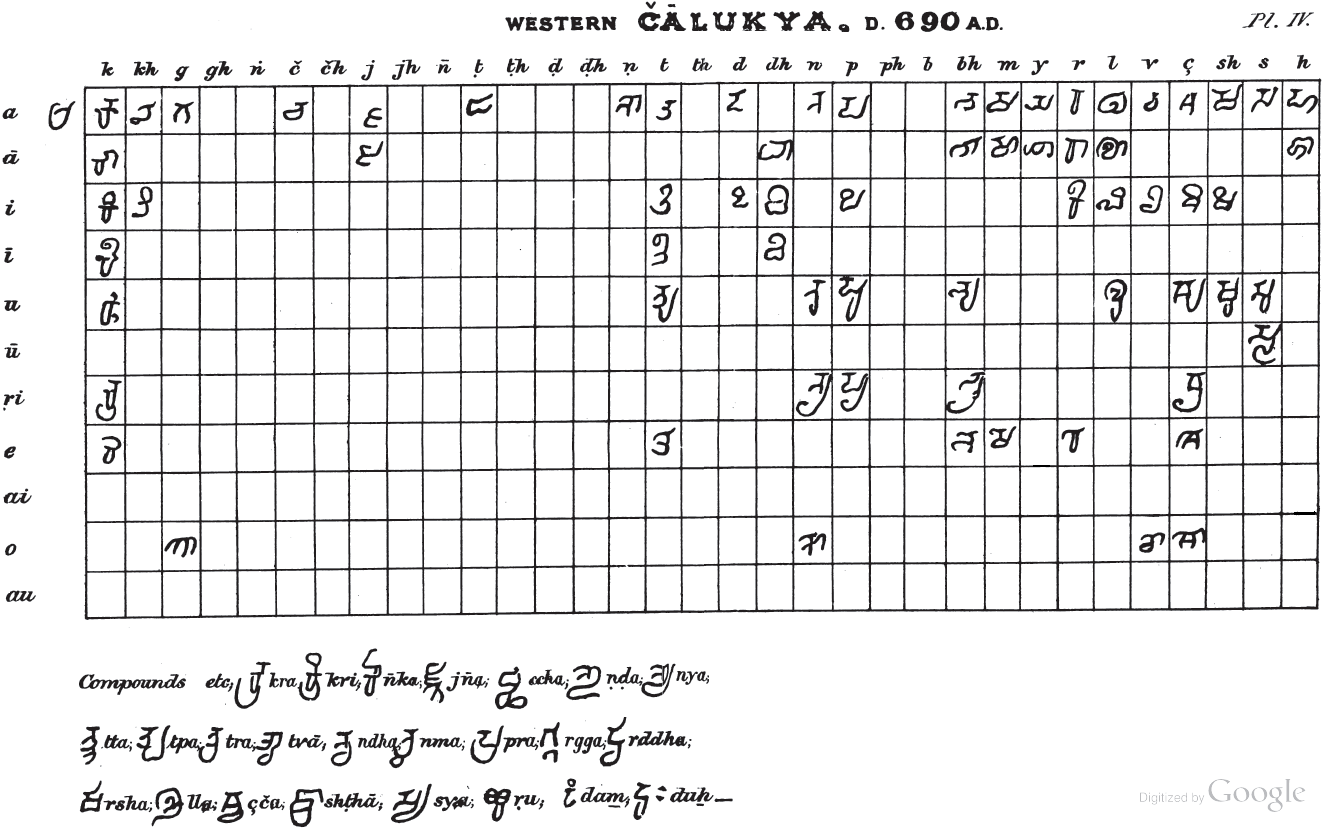
The first three glyph charts come from a Google-scan of Burnell, Elements of South-Indian Palaeography; I have cleaned and re-assembled them into a more useful format.
- Plate I, Vengi forms of 4th century AD
- Plate III, West Chalukya forms of 578 AD
- Plate IV, West Chalukya forms of 690 AD
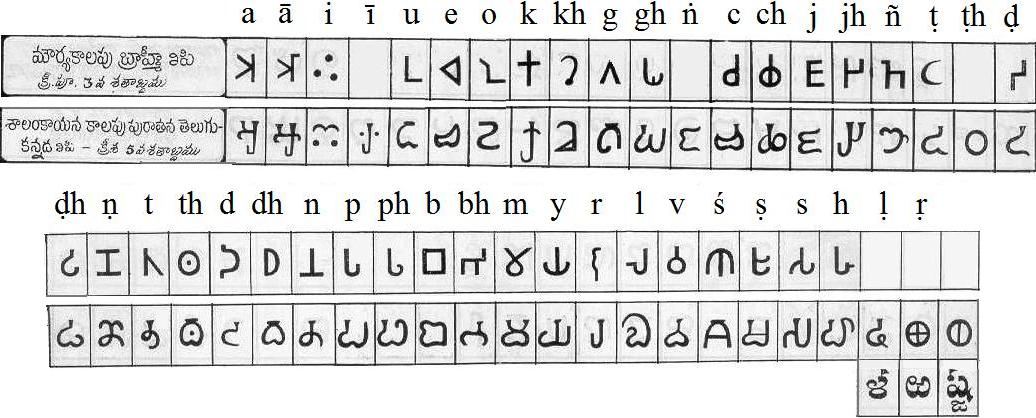
- comparison of Brahmi and Pallava (assembled from unknown Telugu source)
4.2 Ancient derived scripts
- chart of ancient Pyu script by Mattias Persson (assembled from a Unicode proposal by Anshuman Pandey)
- Kawi script in the Laguna Copperplate found in the Philippines (with my transliteration)
4.3 Thai research
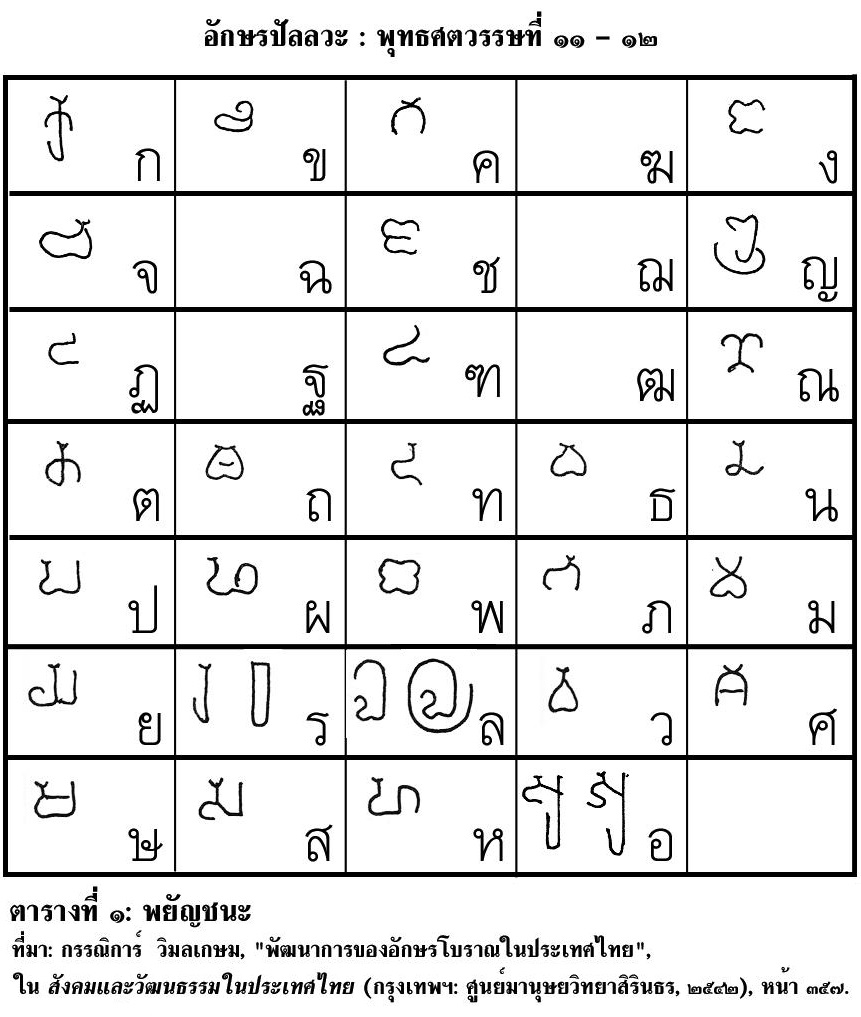
- Consonants 6th-7th century AD (from สังคมและวัฒนธรรนในประเทศไทย, Bangkok 1999)
- Vowels 6th-7th century AD (ibid)