| Image |
Name |
Description |
| 2020
|

|
Feandish
|
A revision of Ian James’ Feandishleigh Simplex script.
|
| 2019
|
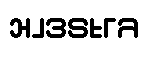
|
Akson Nyadroun
|
An alphabetic script, with influences from various Indic scripts, and Herman Miller’s Ljörr script.
|
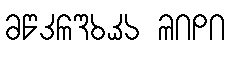
|
Mtskriobha Lipi
|
An extended Georgian-based script in title-case style.
|

|
Dajišathi Arabic
|
A left-to-right alphabetic Times New Roman-derived script based on Arabic, with Latin shapes for the
bases and the dot patterns of Arabic.
|
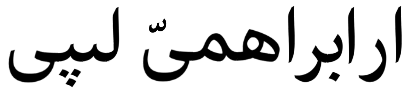
|
Arabrahmi Lipi
|
An Arabic-based alphabetical version of the Indic Brahmi script system.
|
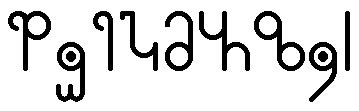
|
Lodwick-zo
|
A new alphabetic script, related to Francis Lodwick’s script
from 1686 (an abjad), the name means “child of Lodwick”.
|
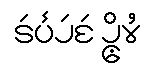
|
Burmiform Arabic
|
Arabic-based script, but with Burmese style and Maldivian-style vowels.
|
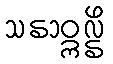
|
Sa Nawaatl Loun
|
A Burmese-based script, inspired by
Machiotlahtololoztli of Ed Trager.
|
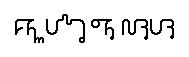
|
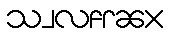
Complanian
|
A complex connected script.
|
|
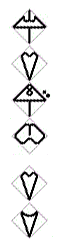
SaLoun X
|
Yet another Burmese-based script, this time an alphabet, with new vowels based on Herman Miller’s Ljörr script.
|
|
Epigraphical Kelideshu Lipi
|
The old epigraphical style of the Kelideshu script, written from top to bottom.
|
|
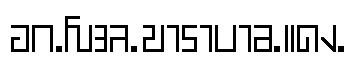
Akson Kharabaw Daeng
|
A Thai-based script in the style of the Thai brand Red Bull.
|
|
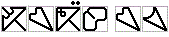
Celidean
|
A complex alphabetic syllabary.
|

|
Rotilep Lipi
|
Syllabary with curious Brahmi-based shapes for consonants, and tone shown with strokes between consonant and vowel
(as in New Akha of Ian James).
|

|
Thrilingic
|
A joined syllabary, where glyphs have many ways of joining.
|

|
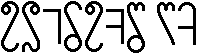
Mailani
|
A complex alphabet, where each word has all its letters joined together, around a center-line.
|
|
Slinseng-gø
|
Phonetic alphabet where all letters are regularly formed from parts often having hooked shapes.
The result is slightly similar to Ljörr by Herman Miller.
|

|
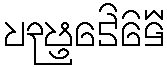
Oronian
|
Syllabary for a Semitic-style language, featuring a rarely-found cursive writing method
(compare with the Yupik syllabary).
Superficially similar to Arabic, but is written left-to-right.
|
|
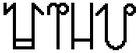
Tachron Khinisu
|
The writing system for Jeffrey Recinos’ con-language Enen-Khinisu;
a definitive chart.
|
|
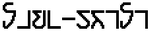
ThebIPA
|
A phonetic alphabet built from parts and resembling the Theban alphabet.
|
|
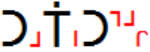
Khazan-likhi
|
A dwarven script from Ruritania, closely related to the Kjaginic script of Herman Miller.
|
|
Math-Miao
|
A greatly extended version of the Pollard/Miao script.
|

|
Bathanian
|
A very compact alpha-syllabary, built regularly from parts.
|
| 2018
|
|
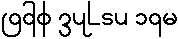
Two’n Wälsa Kom
|
A fully-toned alphabet with glyphs derived from many sources. The name comes from a constructed language by an unknown conlanger.
|

|
Emmetian
|
A nicely styled CVC syllabary, assembled regularly from parts into free-standing shapes.
|

|
Embelyon
|
A syllabary where vowels extend from the body of the consonant.
|

|
Zarkhând
|
An admired geometric, rune-like script by Herman Miller.
|
|
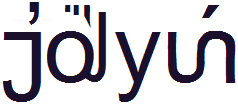
Pedhulka
|
A much admired abugida script by Paul Blake, made for his conlang Xathmel of the Xaîni people.
|
|
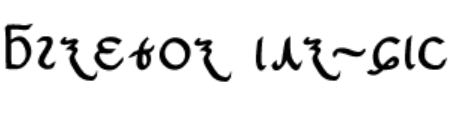
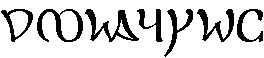
Verdurian
|
A much admired cased alphabet by Mark Rosenfelder – a comprehensive chart.
The script is actually called Znakora etaldei.
|
|
Olaetyan
|
A much admired script by Herman Miller.
|

|
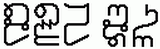
Cawemidha
|
A highly stylised and extended version of Ian James’ Cwemith.
|
|
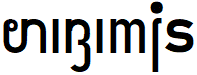
Rowenian
|
A CVC syllabary, assembled regularly from parts in vertical fashion.
|
|
Mathalor
|
An alphabet inspired by, and partially derived from Thalor
of Abraham Barbosa.
|

|
Tua Juliante
|
An extended version of Ian James’ Akkhara Muni.
|
|
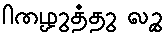
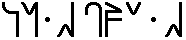
Eluttu Lû
|
A system similar to New Tai Lue, but deriving many shapes from Tamil.
The script Matteluttu was used earlier in the history.
|
|
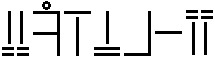
Siksika Niyuukska
|
The third Blackfoot script, a greatly extended version
of the syllabary for Blackfoot
by John William Tims (around 1890).
|
|
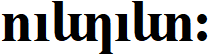
Shembtazh
|
Distantly related to, and inspired by, the cypher from Yezd.
A component phonetic alphabet where consonants are built
from two parts (articulation place & manner), voicing shown by turning the character upside down.
Vowels are stylized pictures of where in the mouth they are produced.
|
|
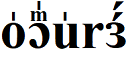
Asali Times New Roman
|
A slightly extended TNR version of Abdul Syukur Sugiharto’s charming
Asali script.
|
|
Makkajarte
|
An abjad derived from Kuba Staszewski’s Kajarte
(a Latin-based abjad for Polish, Arabic and English).
Makkajarte can be used as a phonetic script for the many languages it has letters for.
|
|
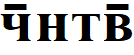
Entu
|
Inspired by Hookscript
of Mathew Gordon and Westonian of N.Weston –
both being Latin-type scripts – and including features from Verdurian (of Mark Rosenfelder)
and some of Ian James’ scripts.
|

|
Matkraotyd
|
An extension and stylistic overhaul of Vehekraotyd
(original script by a contributor to Reddit).
|
| 2017
|

|
Phoencyr
|
A geometric hybrid of Phoenician and Cyrillic.
|

|
Jaqaru script
|
A Brahmi based script for the Amerindian language Jaqaru.
|

|
Dragon 32
|
Character set bitmaps from the Dragon 32 computer released by Dragon Data in 1982.
|

|
Commodore 64
|
Character set bitmaps from the VIC-64 computer released by Commodore Business Machines in 1982.
|

|
Sinclair ZX81
|
Character set bitmaps from the ZX81 computer released by Sinclair Research in 1981.
|
|
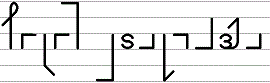
Huduk Pravitsa
|
A phonetically based alphabet used by a race of Mathasian giants, on the con-world of Matharth.
|
|
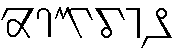
Ljörr
|
A very detailed phonetic alphabet invented by Herman Miller.
Mattias’s definitive chart is from August 2011.
|
|
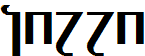
Rahha
|
An alphabet reminiscent of Hebrew, invented by James Campbell in the 1990s
for his conlang of the same name.
|
|
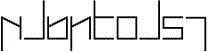
Kantowari
|
A component alphabet with consonant and vowel base shapes each extended, giving a large set of phonemes.
|
|
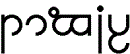
Tengwâr 201703
|
An alphabet based on Tolkien’s famous elven script, greatly extended and with a full set of vowels.
|

|
Verduraish Brahmi
|
An alphabet with features of both Brahmi, and the Verdurian alphabet
of Mark Rosenfelder.
|
| 2016
|
|
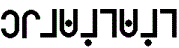
Tua Mai Mai
|
Geometric alphabet with regular component construction, with both consonant and vowel shape-sets.
|
|
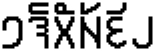
Phoenesir
|
A fully pointed abjad, with features of Phoenician and other ancient scripts.
|

|
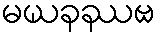
Ni D’ni
|
An alphabet inspired by R.A. Watson’s
D’ni script
(the original was used in the games Myst and Riven).
|
|
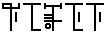
Myannaav
|
Using Burmic script shapes and
features from Ian James’s Nav.
|
|
Mathynna
|
A regular component syllabary inspired by Justin Cheong’s
Grejnhynna.
|

|
Matsørebik
|
A regular component syllabary inspired by Leon Jia Huang’s
Yembik.
|
|
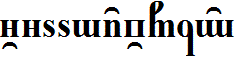
Harriot-zo
|
Related to Harriot’s script of 1585,
with features from Lodwick’s script of 1686
and Ian James’s Amethyst.
|

|
Verduro Cyrillic
|
An alphabet derived from Cyrillic and using features of the
Verdurian alphabet by Mark Rosenfelder.
|

|
Aditrawi S’ehaef
|
A phonetic alphabet inspired by the logo of a Swedish company.
The name means “Aditro’s script” in Amharic.
|

|
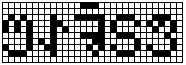
Saloun VII
|
Yet another abugida-type script derived from the Burmese script.
|
|
Ljerønresh
|
A phonetic script related to Herman Miller’s Ljoerr script;
the name means “Ljoerr-like” in Ian James’s
Sgai language.
|

|
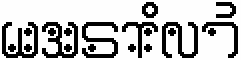
Khatt Brahmi Wakhti
|
A new script vaguely related to Arabic, with Brahmi and the Times Roman font of Latin as inspirations.
|
|
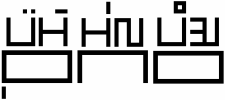
Yosora’s Script
|
An abugida where articulation is marked with external diacritics and vowels with internal markings.
|
|
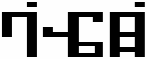
Brahelmas
|
A syllabary inspired by the Elmas script
for Turkish of Adiljan Barat, with a more Brahmic structure.
|
|
Trynsh
|
A syllabary being a slight alteration and full extension of Ian James’s
Habloid script.
|

|
Pokhi
|
An abugida with geometric assembly; revision of a script from 2004.
|
| 2015
|
|
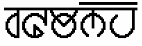
DevaLipi
|
A development of Brahmic scripts, with reference to Devanagari.
|

|
Thabimande
|
An abjad inspired by Manet Sepúlveda’s
Chillkadunguwe
script for Mapudungun.
|

|
XylphiLoun
|
Inspired by Burmese and Ian James’s
Xylphika, a very full script.
|

|
IPA no Kaet-Isshai
|
A revisional subset of the IPA with special treatment of
diphthongs and triphthongs, and a couple of new consonant symbols.
|

|
Pharaino
|
Brahmi-based alphabet with consonantal modifiers derived from Ethiopic, and a geometric set of vowels.
|

|
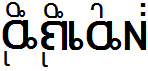
Prak’icha
|
A nicely-flowing component syllabary.
|
|
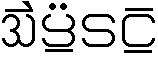
Monto Mai
|
A re-figured and greatly extended version of Ian James’s Monto.
|
|
Sauverja
|
A scientific phonetic abjad inspired by several scripts,
most importantly Bell’s Visible Speech.
|

|
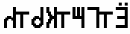
Mu3abi Lipi
|
A phonetic script, inspired by
New Moabite.
|
|
Naukaitaz
|
A phonetic syllabary ultimately inspired by
Kapunuan of Joseph Barretto.
|

|
Mp’hriat Ittim Lipi
|
An original alphabet resembling Pahawh Hmong, extended with diacritics.
Some characters derived from Thai, Khmer and other SouthEast Asian scripts.
|

|
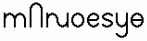
Emeshir
|
A vertically built syllabary with three parts for each character.
Inspired by the transcription of Cuneiform scripts.
|
|
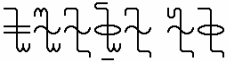
Cilderyn
|
An elven alphabet with a twist.
|
|
Keresimesi Lipi
|
A scientific three-part syllabary resembling the Ethiopic script.
|
| 2014
|

|
Ngaldemin
|
A horizontally built consonant-vowel-consonant syllabary;
can be used for Sumerian, Hausa, Arabic, Klingon, etc.
|

|
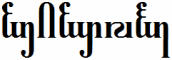
Truantaan
|
A vowel-centered insular (for Polynesian-type languages) script.
|
|
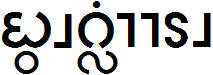
Tulksharthi
|
An attractive component-based syllabary, with some influence from
Tullish of Ian James.
|
|
Shwanklira
|
Regularized and extended Brahmic script which features some Burmese shapes
and a large inventory of vowels.
|

|
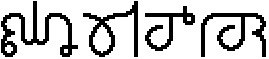
Lannaa Lue
|
Combines the shapes of traditional Lanna with the structure of Tai Lue script.
|
|
Shiwando
|
A component-based syllabary.
|
|
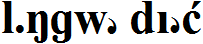
Langue d’Hech (extended)
|
A novel use of Latin letters, replacing vowels with patterns of dots & commas.
|

|
Klak Sentlai
|
This script was inspired by the graphical style of Hebrew,
but it has the structure of Siizu Lipi.
|

|
Neo Musnad
|
A stylish script based on South Arabian Musnad.
|

|
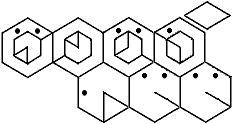
Darba-t Oriminya
|
An alien script idea from 2002, for a race who look like the Michelin Man,
and breathe a chlorine atmosphere.
|
|
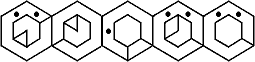
Old Macisnen
|
A phonetic script designed to be the precursor of Modern Macisnen (below).
|
|
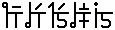
Modern Macisnen
|
A phonetic script built consistently from geometric parts,
inspired by a sci-fi script of David J. Peterson.
|
|
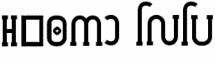
KapunuPhon
|
A component-based script being an extension of Joseph Barretto’s script
Kapunuan.
|
|
Bethano Lipi
|
A Brahmic script with some new shapes.
|

|
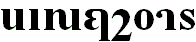
Shigorvi
|
A geometric script, modeled on Brahmic series and extended Japanese phonology.
|
|
Pelorian
|
A phonetic script, modeled on Brahmic series and Latin shapes.
|
|
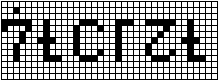
Thonuvo
|
An LCD style script based on the shapes of hexadecimal digits, with phonetic-featural vowels.
|
|
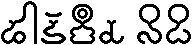
Shorvina Lipi
|
A new treatment and extension of the 7th century Pallava script,
including many more vowels.
|
|
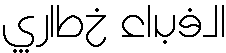
Extended Khattarese
|
A development of Nasri Khattar’s script Unified Arabic.
|

|
Matsandawe
|
Alphabet with phoneme inventory of Sandawe, design started in 2008.
|
| 2013
|

|
Swaranyana
|
Large alphabet in a Times New Roman style, with forms subtly derived from various Brahmic scripts.
|
|
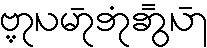
Burmaniora
|
A Burmese derived abugida with some inspiration from Brittanie McCormack’s
Niora script.
|

|
Tua KhmaeBu
|
A hybrid of Khmer and Burmese where each letter’s vowel variant is determined
by the “hair” on its top (like Akson-e-Saq).
|
|
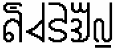
Tua Brasylh
|
Regular alphasyllabary with elements of Brahmi within many letter shapes.
|
|
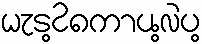
Burthaikanlep
|
Abugida with elements of Burmese, Thai, Lao and other Brahmic scripts.
|

|
Thivãta Lipi
|
Full alphabet where each letter is built from phonetic parts.
|

|
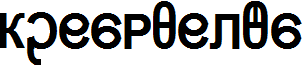
Adamyanu Albethe
|
A phonetic-featured abugida inspired by Lirean
of Edward dela Peña.
|
|
KyriLue
|
A hybrid and extension of the Cyrillic and Tai Lue scripts.
|

|
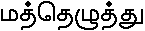
ExTaiLue
|
An extension of the Tai Lue script.
|
|
Matteluttu
|
An extension of the Tamil script, with a chart showing all matras.
|

|
Slinseng di Mwargil
|
A cursive alphabet inspired by Slinseng-Fi of Ian James.
|

|
Jacobi Lyppai
|
A large semi-syllabary, where complete syllables may be written with two glyphs.
|

|
New Lao
|
An extension and modification of the Lao script, with inline vowels.
|

|
Thai Kradum
|
A new syllabic system for Thai, where CV forms are connected inline.
The roundness is inspired by Oriya,
and the name means “Thai as buttons”.
|

|
Nâwâ Lipi
|
A Brahmi-Lanna-Khmer hybrid where consonant clusters and diphthongs form subscripts and superscripts,
and a full syllable assembly resembles a boat (nâwâ).
|

|
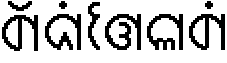
Myandarian
|
Burmese-based script with vowel system based on that of Darian by Ian James.
|
|
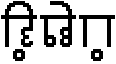
Tëndolat
|
A large Brahmic abugida resembling Oriya.
|
|
Gwidchewa
|
A large-inventory abugida resembling Devanagari,
inspired by a script called Gurkha
(found on Omniglot).
|
|
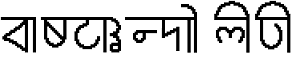
Bashtondo Lipi
|
Similar to Devanagari, with extra phonemes and many new forms.
|
|
Dravida Lipi
|
A Brahmi-based alphabet with toned vowels, and sound system similar to Tamil.
|
| 2012
|

|
Gisvagian
|
Named after a Japanese game character, this script is an interesting development
of Tolkien’s script Tengwar.
|

|
Oberonlipih
|
A component-based phonetic alphabet with a cursive wavy flow.
|

|
Lisan ul‘ayni
|
An abugida where syllables are joined to make wave-like words.
|

|
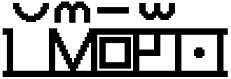
Dargothi
|
An alphabet where glyphs are derived from many sources.
|
|
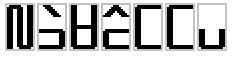
Polynesia
|
Syllabic script where consonants modify vowels, mainly for CV languages.
|

|
NeoHatran
|
An extended alphabet derived from a stylization of the ancient Hatran script.
|
|
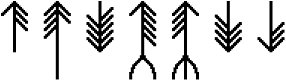
Brahmiyezd
|
An abjad-abugida inspired by a Yezdi cypher.
|
|
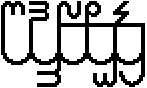
Xälwori
|
An elvish syllabary.
|
|
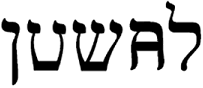
Lashon
|
An extension of the Hebrew alphabet with many new letter shapes.
|
|
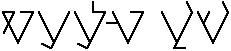
Marrana Lipi
|
Alphabet using just a V shape and diacritics.
|

|
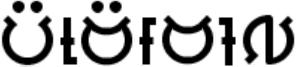
Burkailau
|
Alphabet inspired by Modern Kayah Li,
with extra vowels and influences from Lao and Burmese.
|
|
NoMoBel
|
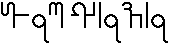
A variation of Bell’s Visible Speech, based on
Neo Mon Geometric by Ian James.
|
|
Shammai
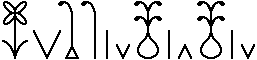
|
An original Tai alphabet where tone marks attach to the consonant. Sound system is based on Shan.
|
|
LikTaiMao Mai
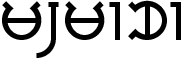
|
A new kind of alphabet, inspired by the “bean sprout” script of Shan,
with vowels derived from ancient Samaritan.
|
|
Mjama Sa
|
An expansion and revision of Ian James’
Neo Mon Geometric, for Burmese and Sanskrit.
|

|
Mifo-Cyrillic
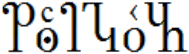
|
a Cyrillic-based script inspired by the
Adyghe “ancient” alphabet.
|
|
NeoLodwick
|
a phonetic alphabet extending that of Francis Lodwick’s 17th century
Universal Alphabet.
|

|
Matsumerian
|
a fully cursive script especially for languages with CVC syllables.
|

|
Macirt
|
based on Tolkien’s script Cirth, with Times New Roman style.
|

|
Cham Mai
|
a revision of the Eastern Cham script, where new vowel forms allow a smoother flow of text.
|

|
Ancient Vithojem
|
the original form of Vithojem, where the vowels were attached to their consonant.
|

|
Vithojem
|
a variation of Thomas More’s Utopian alphabet,
with Cyrillic and Indic influences.
|

|
Kirentina
|
a TaiLue-style script with scientifically built consonants, influenced by
Brahmi, in the style of the font
Frankfurter by Linotype.
|
|
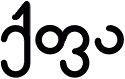
Kartuli Phonet’ik’uri Anbani
|
an extended Georgian alphabet, in a style based on the font Frankfurter by LinoType.
|

|
Mjama Thai
|
Burmese consonants in a style derived from the font Frankfurter by Linotype.
TaiLe- or NewTaiLue-style vowels derived from Burmese and some other sources.
|
|
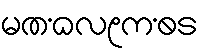
Mandalâkshara
|
a syllabary of the southern Indic type, derived from Burmese characters.
|

|
Xanadian Syllabary
|
a neat and regular syllabary from the fictional ancient city of Xanadu,
in the con-world of Matharth.
|

|
Xanadian Phonetic Alphabet
|
a very full phonetic alphabet from the linguists of Xanadu.
|